

What entity type is best for my startup?
In the fast-paced world of startups, growth and success can hinge on the key metrics you follow.
The information they provide is essential, but metrics alone cannot make you successful. It's the actions you drive as a result of these vital indicators that contribute to success. These metrics help you navigate the complexities of the market, make informed decisions, and steer your ventures toward sustainable growth.
In this post, we'll outline the strategic metrics every startup founder should monitor to ensure their business is on the right track.
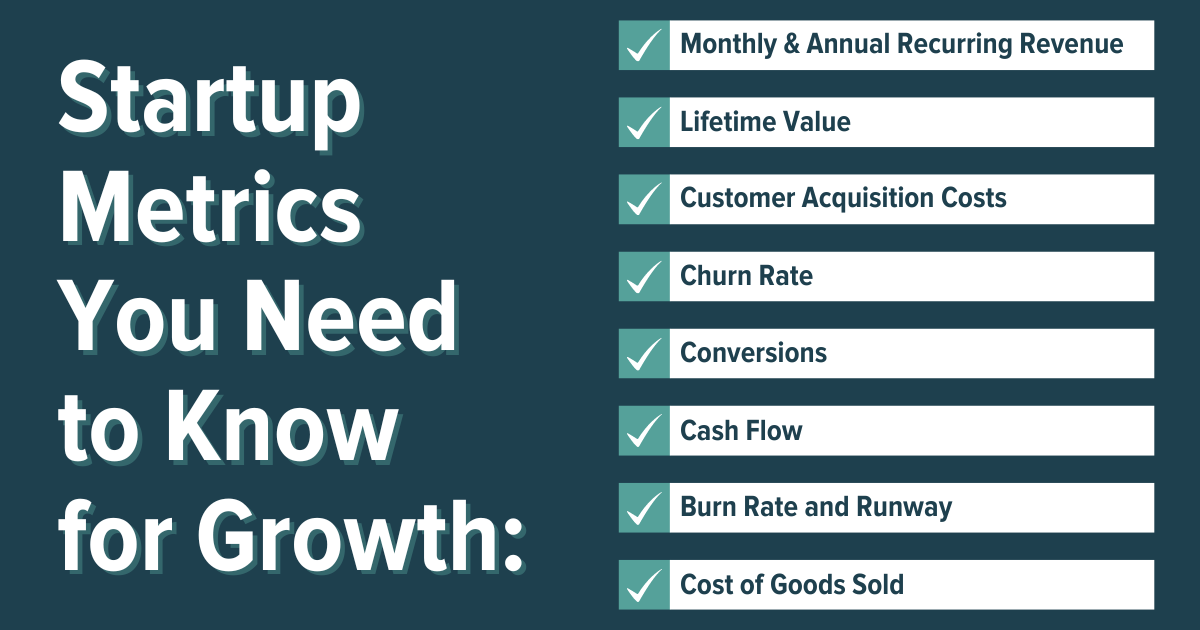
Metric 1: Monthly Recurring Revenue (MRR) & Annual Recurring Revenue (ARR)
MRR and ARR are pivotal metrics that measure the consistent revenue a business generates from its subscription-based services. MRR provides a snapshot of the predictable monthly income, allowing startups to gauge short-term financial health.
ARR offers a long-term view, helping forecast annual revenue and set strategic goals.
As recurring revenue is generally stable (minus churn, more on that later), it can help you decide when and how to invest. ARR and MRR can help answer questions like:
- When do you need more customer service reps?
- Can we afford another developer?
- How much can we spend on marketing this quarter?
Focusing on these factors can help you drive higher recurring revenue.
- Customer Retention: Foster strong relationships with existing customers to reduce churn and maintain steady revenue.
- Upselling and Expansion: Enhanced features or services can encourage existing customers to upgrade their subscriptions.
- New Customer Acquisition: Implement targeted marketing campaigns to attract new subscribers and grow your customer base.
Metric 2: Lifetime Value (LTV)
Also known as customer LTV (CLTV), this metric represents the total revenue a business can expect from a customer over their entire relationship.
It helps in understanding the long-term profitability of each customer. Balancing LTV against Customer Acquisition Costs (CAC) ensures that the investment in acquiring customers is justified.
To maximize LTV, consider:
- Customer Loyalty Programs: Reward loyal customers to encourage repeat business.
- Personalized Experiences: Tailor services to meet individual customer needs and preferences.
- High-Quality Service: Consistently deliver exceptional service to build trust and loyalty.
Metric 3: Customer Acquisition Costs (CAC)
CAC measures the cost of acquiring a new customer, including marketing and sales expenses. When coupled with LTV, it's a robust efficiency assessment that evaluates the effectiveness of your marketing strategies and channels. It also helps you allocate resources efficiently to maximize return on investment (ROI).
Optimizing CAC involves:
- Target High-Value Segments: Focus on customer segments with the highest potential value.
- Refine Marketing Channels: Identify and invest in the most effective marketing channels.
- Improve Conversion Rates: Enhance website and sales funnel performance to convert leads more efficiently.

Metric 4: Churn Rate
The churn rate quantifies the percentage of customers who stop using your product or service over time. In simpler terms, it's a measure of how many customers you're losing. A high churn rate can be a sign that your product or service is not meeting customer expectations or that your competitors are offering better alternatives.
Churn impacts revenue by directly affecting revenue stability and growth prospects. It's also an indication of customer satisfaction and loyalty.
To reduce churn, work on improving:
- Customer Engagement: Regularly engage with customers through personalized communication and support.
- Product Enhancements: Continuously improve your product based on customer feedback.
- Proactive Support: Address customer issues promptly to prevent dissatisfaction.
Metric 5: Conversions
Conversion rate measures the percentage of visitors who take a desired action, such as purchasing or signing up for a service.
Conversions indicate sales performance and the success of your marketing campaigns. They directly impact revenue by converting leads into paying customers.
Great conversions typically involve:
- Targeted Messaging: Craft compelling messages that resonate with your audience.
- A/B Testing: Experiment with different elements of your marketing campaigns to identify what works best.
- User Experience Optimization: Ensure your website and sales funnel provides a seamless experience.
Metric 6: Cash Flow
Cash flow tracks the movement of funds into and out of your business, indicating liquidity, robust financial health, and operational sustainability. Positive cash flow is crucial for day-to-day operations and long-term viability. Understanding your cash flow helps with planning for your future financial needs.
Managing cash flow:
- Budgeting: Create detailed budgets to manage expenses and avoid overspending.
- Forecasting: Predict future cash flow based on historical data and market trends.
- Strategic Planning: Plan for contingencies and ensure sufficient reserves for unexpected expenses.
Metric 7: Burn Rate and Runway
Cash is the life force in any business. The company needs it to operate.
Burn rate measures the rate at which a startup uses its available capital. At the same time, runway indicates how long the capital will last at the current burn rate.
Understanding burn rate and runway helps manage expenses and plan for future funding needs. Knowing your runway allows you to strategically plan the timing of funding rounds.
Managing Burn Rate:
- Expense Control: Monitor and control operating expenses to extend your runway.
- Revenue Generation: Focus on increasing revenue streams to offset the burn rate.
- Funding: Secure additional funding well before your runway ends to ensure continuity.
Metric 8: Cost of Goods Sold (COGS)
COGS represents the direct costs of producing goods or services your business sells.
Any talk of profitability or pricing strategies requires understanding what drives your COGS. Maintaining margins means generating enough revenue to cover your cost of goods sold (and then some).
Controlling your COGS is a significant factor in profitability. You can do that through:
- Supplier Negotiations: Negotiate better terms with suppliers to reduce costs.
- Production Efficiencies: Streamline production processes to minimize waste and maximize output.
- Cost-Saving Measures: Implement measures to reduce costs without compromising quality.
Use Metrics to Drive Startup Growth
These essential metrics can help you maintain control of your startup's growth and success. These key indicators play a crucial role in making informed decisions, driving sustainable development, and achieving long-term success.
Are you ready to take your startup to the next level?
Contact the startup finance experts at Founder's CPA today to learn how to prioritize these metrics and leverage data-driven insights to steer your business toward a bright future.


.jpg?width=500&height=500&name=Untitled%20design%20(1).jpg)